
Insights & News
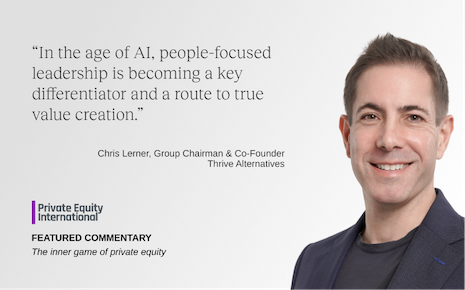
PEI Perspectives: Changing Status Quo Offers PE Opportunities


Q: Where do you see the fastest growth in private markets, and what opportunities does that create for newcomers?
If you look at the last two years – and more importantly look ahead – it is clear that the fastest growth in private markets is coming from private credit and infrastructure. That is largely driven by the banks’ continued retreat and by investors’ appetite for yielding strategies. By their very nature, private credit and many infrastructure strategies are designed to generate stable income, which is exactly what investors are seeking in a higher-rate environment.
At the same time, infrastructure and the energy transition remain huge growth areas. Climate-focused investing is now far broader than just wind and solar – it is increasingly tied to the surge in artificial intelligence, data centres and the power infrastructure needed to support them. LPs really like playing in that field because it combines yield, growth and long-term visibility.
The key question for newcomers is therefore: where are the gaps? Replicating what the big funds are doing is incredibly difficult right now. The way in is through ultra specialism: targeting narrow but high demand niches that larger platforms overlook.
Private equity fundraising next year will be dominated, particularly in Europe, by the largest players coming back to market with their flagship funds. That creates real challenges for even established small- and midcap firms. For newcomers, the only viable entry point is to tackle specific pain points; something meaningfully different that the large managers can’t or won’t.
Q: As the tough fundraising climate continues to favour brand-name GPs, is institutional capital becoming too concentrated? How can new GPs cut through?
There is a clear convergence around the larger platforms: the all-weather asset managers that now have strategies across every corner of the private market. From an LP’s perspective, that feels like a safe place to put capital, but the question is: does safety equal performance? I am not entirely convinced. As these funds grow larger, even established small- and mid-cap managers are finding it hard to raise, and investors are scrutinising them heavily when they try to scale up.
For new GPs to cut through in this environment, I think there are four golden rules. First, a spin-out from a recognised brand still carries a lot of credibility. Second, you need a realised track record, not just paper gains. Third, you must have a distinct angle in the value chain. LPs are asking: is there a genuine gap this strategy fills, or is it just another version of what I already own? That is a hard question to answer, but disruption from AI and geopolitics is creating new openings if you can connect the dots.
Finally, if you are coming from a big-brand GP, investors will want to see anchor LPs backing you early, ideally some that supported your previous fund. That kind of validation speaks volumes in today’s market.
Ultimately, new GPs can still break through, but they must bring credibility, clarity and conviction from day one.
Q: How are geopolitical shifts impacting capital flows?
The US-China decoupling is having a direct and visible impact on capital flows. Investment into China has slowed sharply, and we are now seeing that capital being redirected across the region, with Japan in particular emerging as a major beneficiary of this realignment.
In Europe, the picture is also changing fast. Evolving trade policy and a new wave of economic protectionism are forcing the region to reinvest in its industrial and investment strategies. A few years ago, nobody would have expected to see dedicated defence or security funds raising capital in Europe—that was traditionally a US-dominated space. Yet today, the number of first-time funds in that area is striking.
More broadly, geopolitical shifts are reconfiguring how and where private capital flows. I think we will see a growing focus on regional specialists that deeply understand their local dynamics: regulatory, cultural and political. We may also see new forms of collaboration emerge—for instance, sector-focused managers teaming up with country specialists to combine operational know-how with local market intelligence.
The bottom line is that capital is not retreating; it is rewiring. The advantage will sit with those that know how to navigate that new map.
Q: How can GPs capture AI opportunities to gain an operational edge?
Everyone is trying to figure this out. From an LP perspective, the focus is twofold: how can AI drive value creation inside portfolio companies; and how can it enhance fund-level operations, from origination to due diligence and deal execution.
The bigger question is whether the explosion of accessible information is ultimately a good thing for private markets. Much of the industry’s edge historically has come from information asymmetry. If everyone has access to the same data, what does that mean for the concept of alpha in private investing?
For deal teams, the real shift will be in who they hire and how they work. Traditional investment professionals are not necessarily equipped to make the most of all the AI tools available to them. Two years from now, I expect we will see a very different composition of investment teams, with far more people who have data science or tech backgrounds alongside financial analysts.
However, AI is not a magic plug-in. The competitive advantage is not simply in using it, but in building repeatable playbooks that tangibly move EBITDA. Right now, that is still missing when many GPs explain their AI strategies, and LPs are looking for those proof points.
Q: How are prolonged higher interest rates impacting GP thinking on valuation discipline, underwriting assumptions and exit timing?
The biggest issue over the past two years has been the lack of distributions. The industry was spoiled by a decade of low interest rates, when returns often relied on underwriting assumptions built around multiple arbitrage and cheap leverage. The world has changed.
LPs are now questioning whether those assumptions are still valid and how they need to be recalibrated for a higher base-rate environment. We are going to see a much greater focus on margin improvements and operational value creation rather than leverage-driven returns. LPs are digging deeper into the true drivers of performance, not just headline IRRs.
While I do not expect rates to stay at current levels forever, they are also unlikely to return to the ultra-low environment we had before. That means GPs must revise exit timing and valuation assumptions, which naturally extend hold periods.
In response, we are seeing more creative liquidity solutions, all designed to deliver much-needed distributions back to investors. The market-wide focus now is on DPI and cash-on-cash outcomes, not just paper value.
LPs are looking for GPs that come to them with fresh underwriting models that reflect today’s cost of capital, and those that recognise that the era of easy multiple-arbitrage expansion is behind us.